Walk on already knowing.
Who to rest, who to cap, who is good to go — ranked before the first whistle, from a check-in the athlete does on their own phone. No wearables, no spreadsheets, no chasing.
The squad, sorted by who needs you.
Green: train them hard. Amber: ease off. Red: manage. The athletes who need a decision rise to the top, each with the reason beside them — no interpretation required.
A coach's eyes, on every athlete, every morning.
One board, ranked by who to manage
Every athlete on a single screen, sorted so the ones who need eyes on them rise to the top — before you name your team.
Spikes and niggles, surfaced early
Load ramps and repeated soreness raise a flag on their own, days before they become a hamstring on Saturday.
A defensible record of every call
Rested, capped, cleared — each logged with the reason, so you can stand behind any decision a parent questions.
Nothing to buy, nothing to strap on
No GPS units, no heart-rate straps, no hardware budget. It runs on a sixty-second phone check-in built on published sport science.
Not a mock-up. The dashboard your staff sign into.
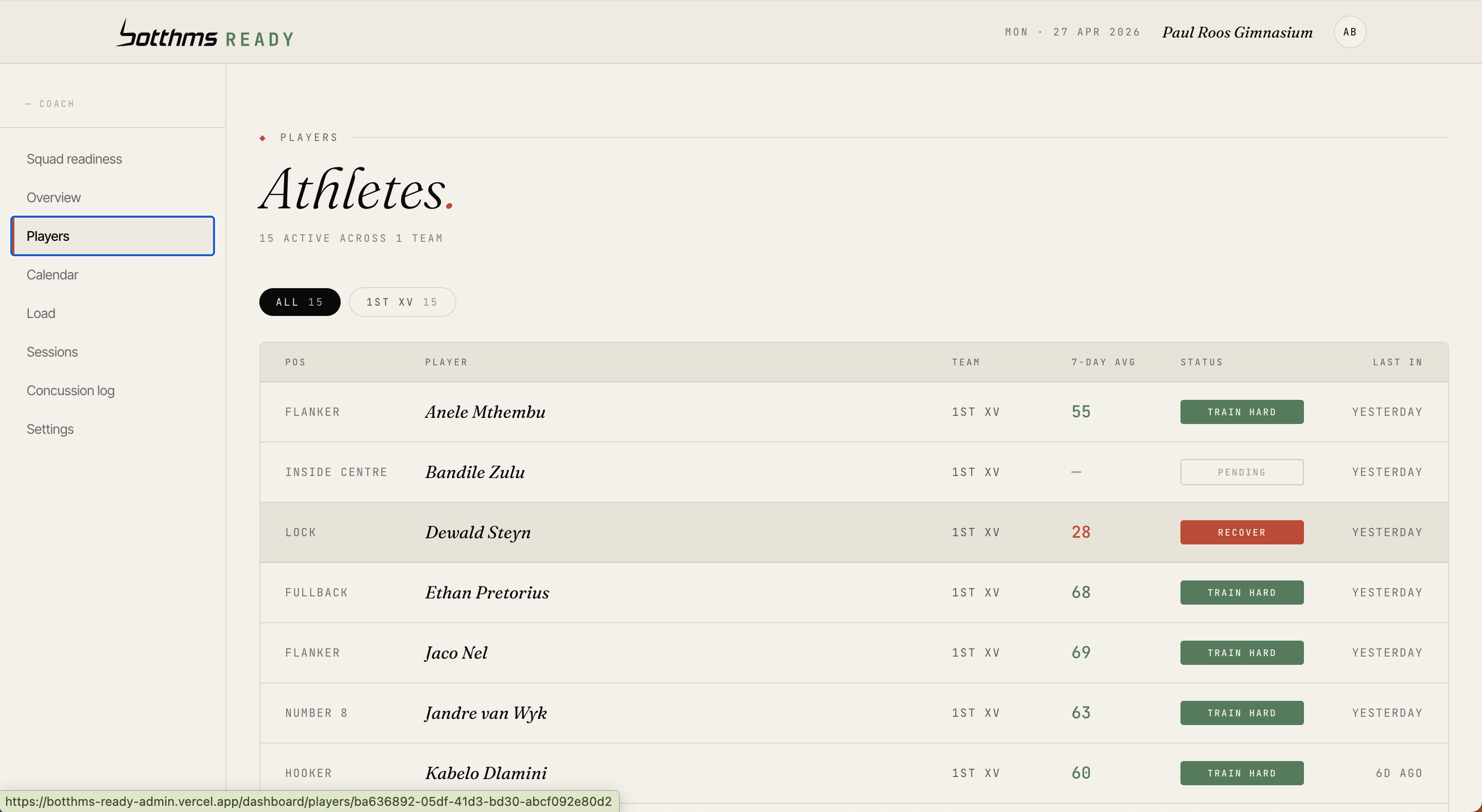
The squad list — status and 7-day average for every athlete, in one place.
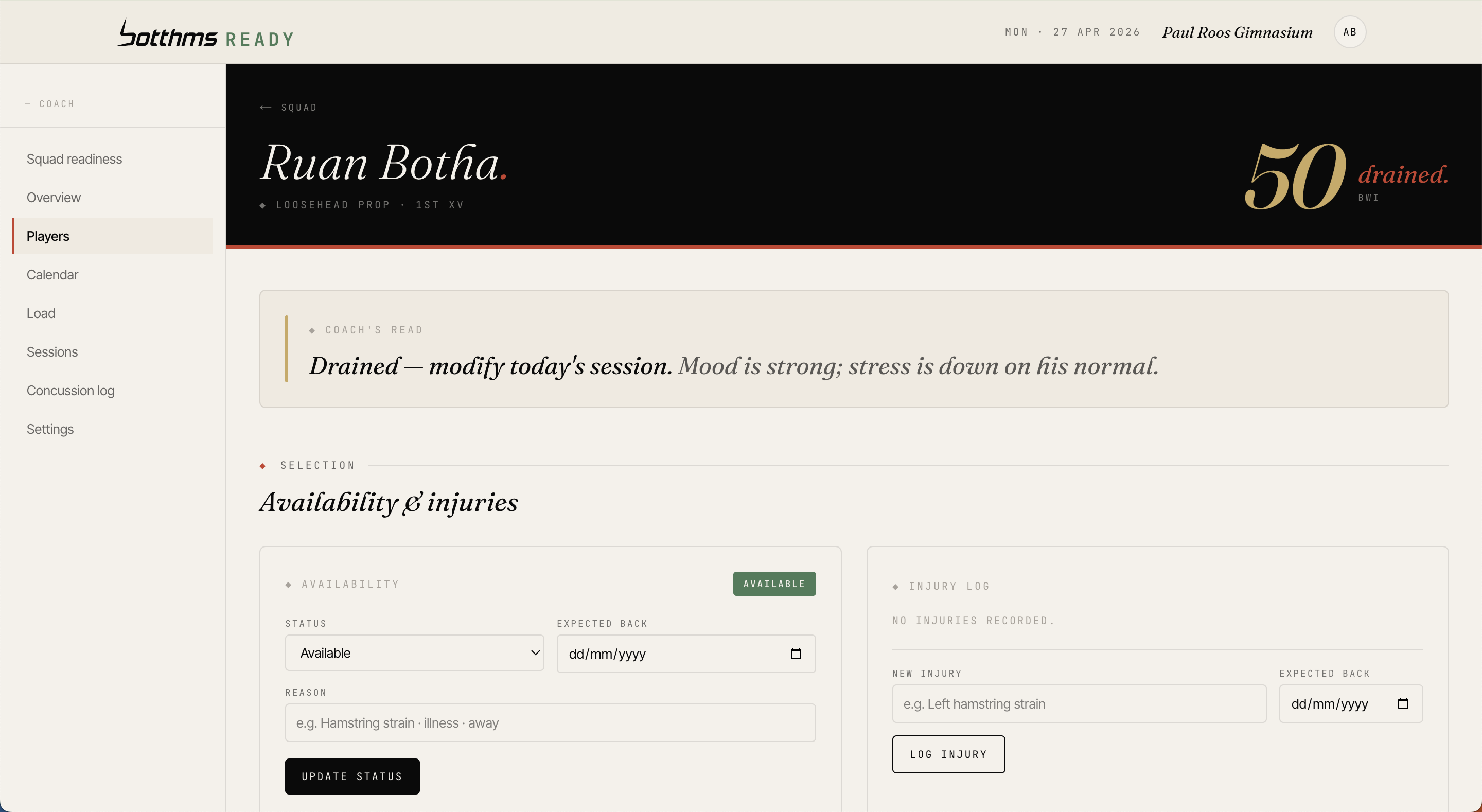
Open any athlete for the read in plain English — what today's score means, what is driving it, and an injury log you can keep current.
The ones coaches actually ask.
Do I need GPS units or heart-rate straps?
No. The board runs on session-RPE and a daily wellness check-in, both validated in published sport science and needing nothing but a phone. If your school already owns GPS or heart-rate hardware, that data can layer on top.
Can it predict injuries?
No, and anyone who says their system can is overselling. The acute:chronic workload ratio is a spike detector that starts a conversation between you and an athlete — which is where the value is. We show it as exactly that.
How long does it take to get a squad running?
Minutes. Add a team, invite the athletes, and they check in the next morning. You are reading a board the same week.